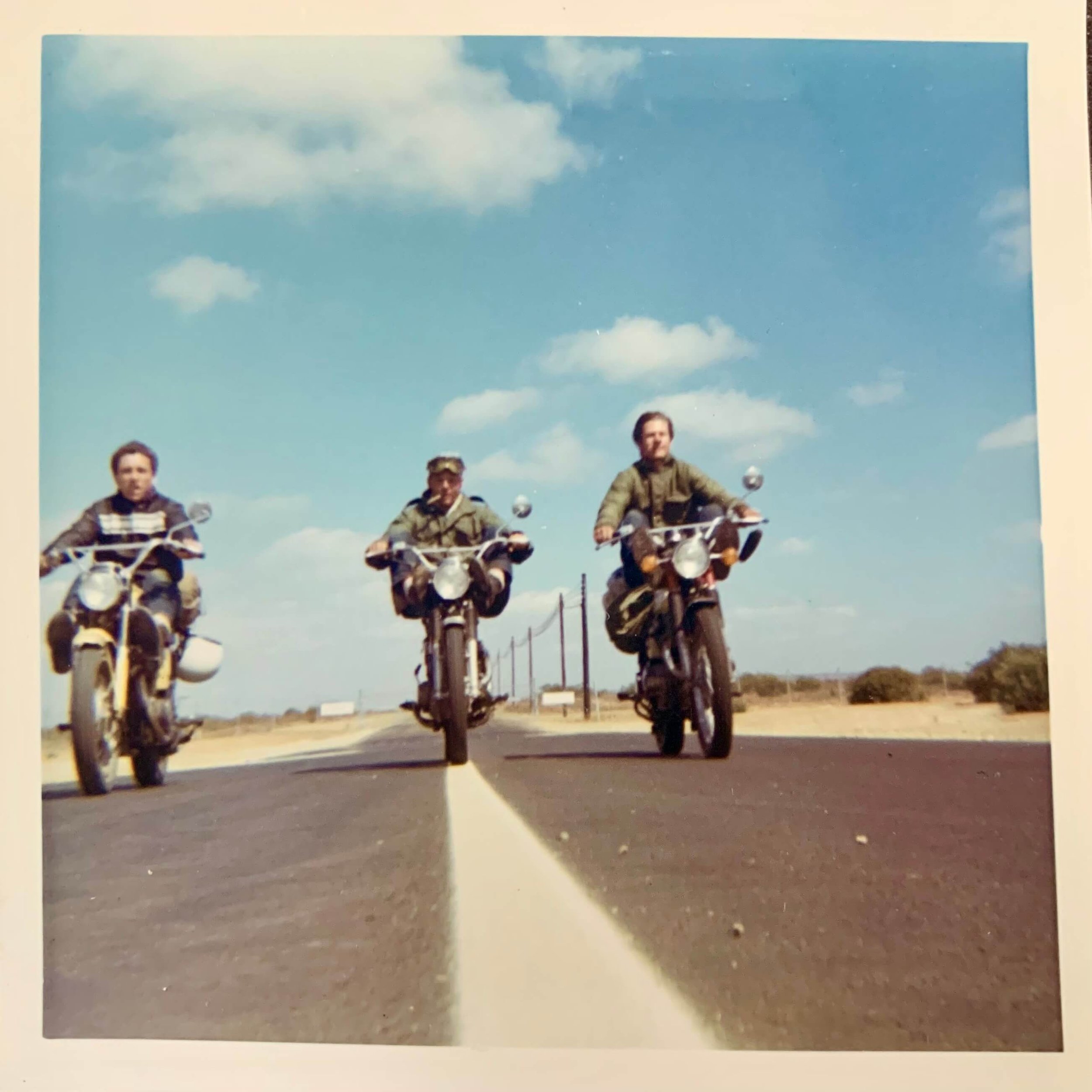
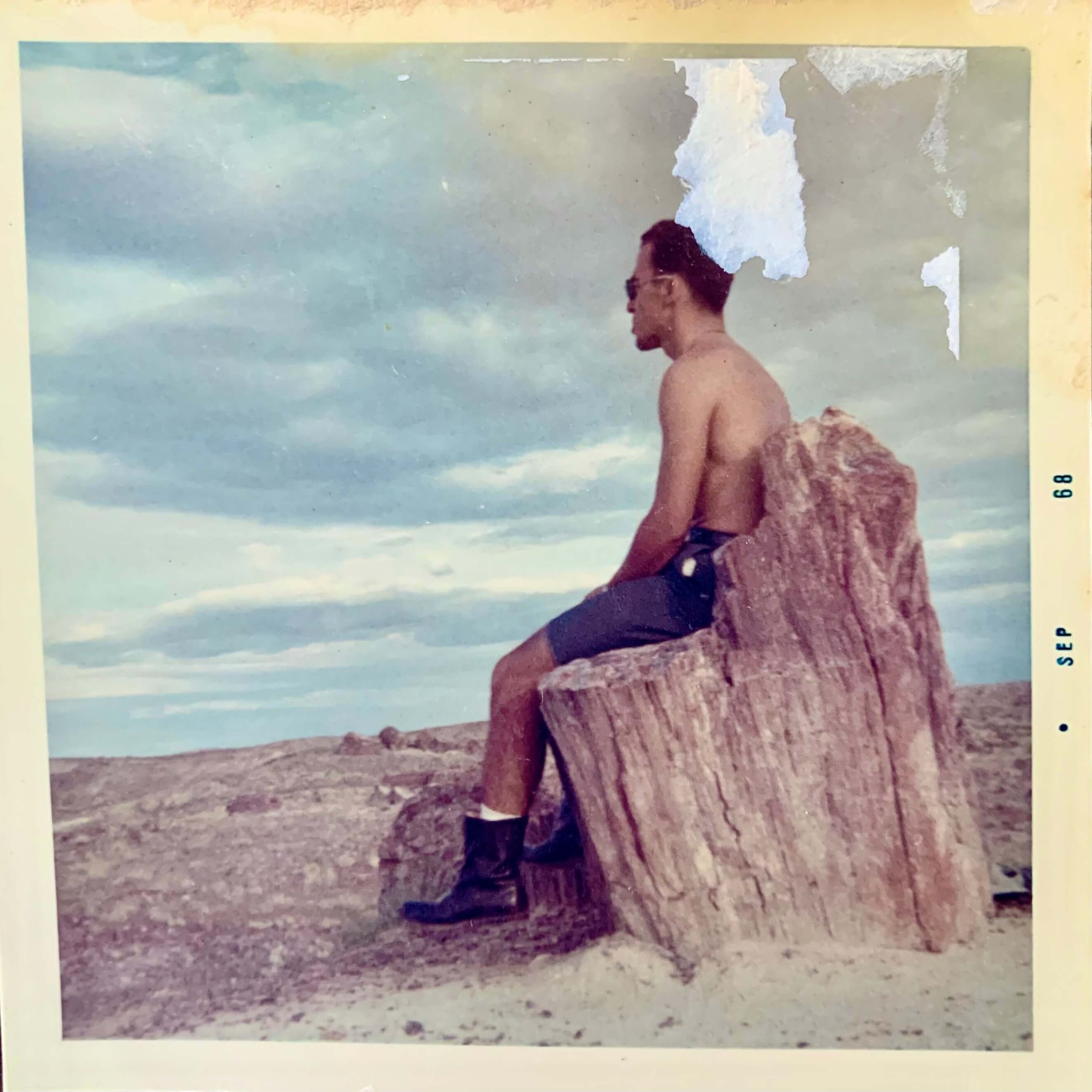
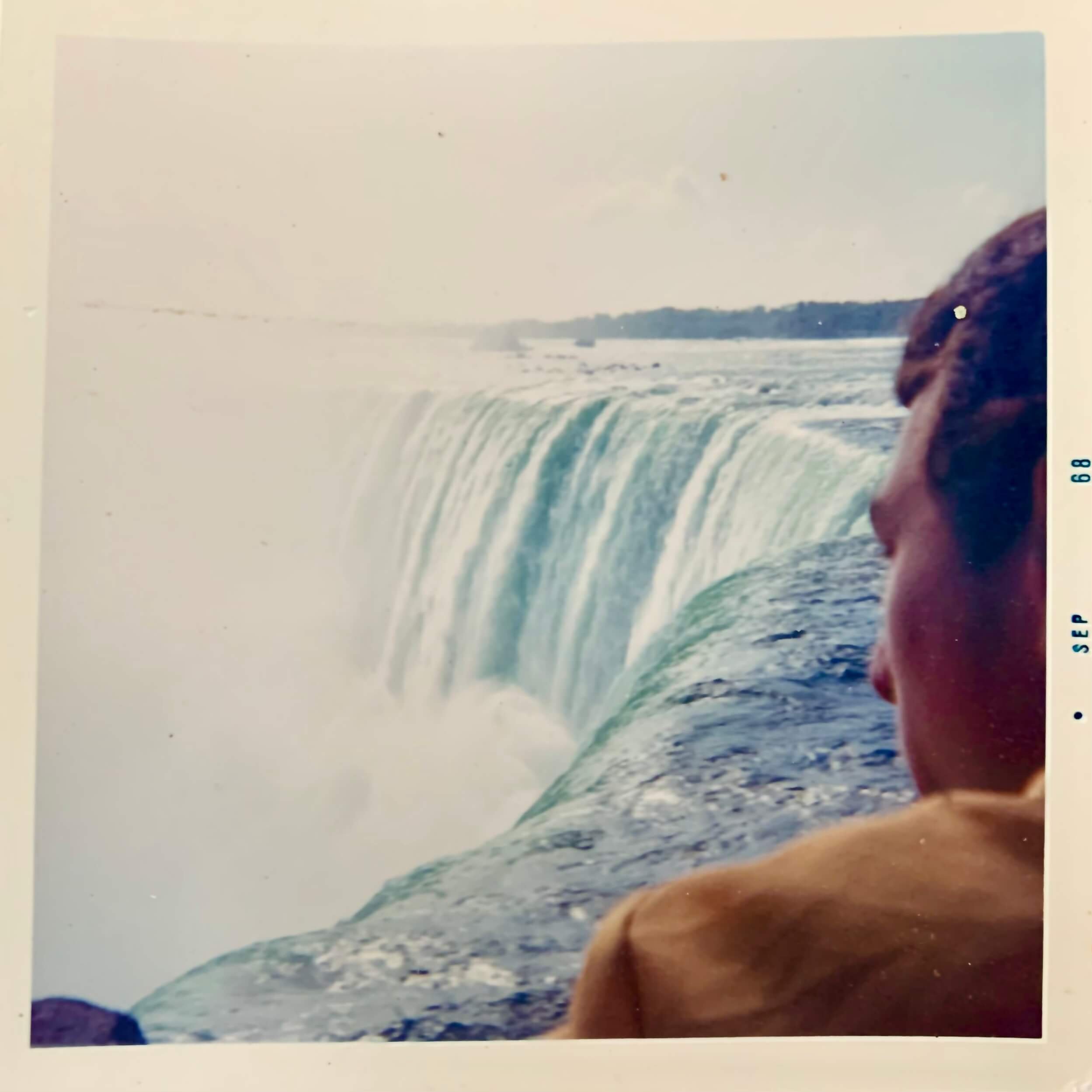
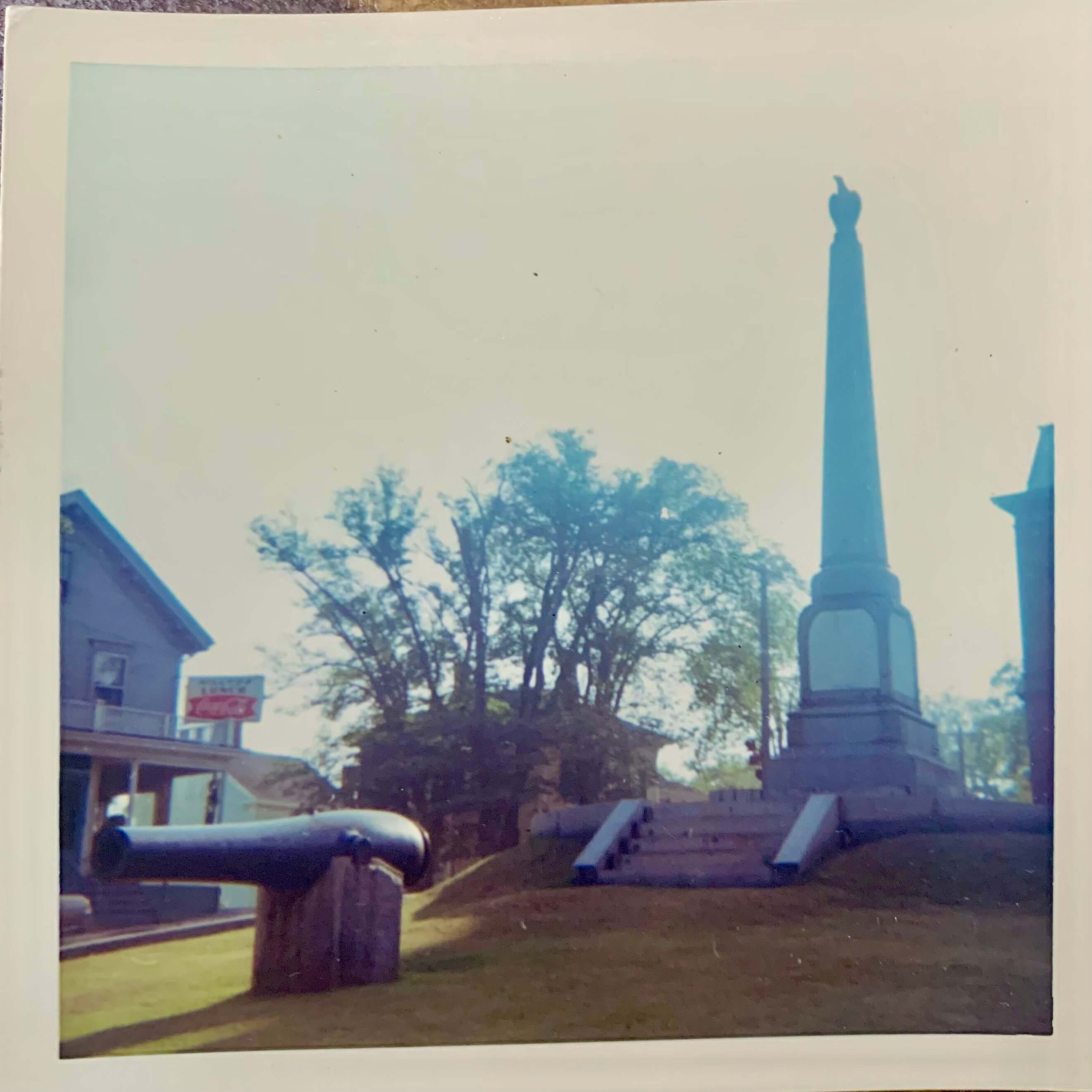
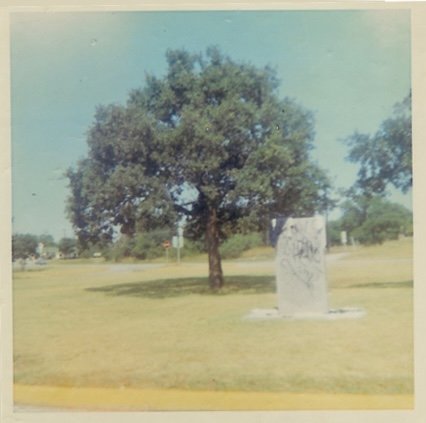
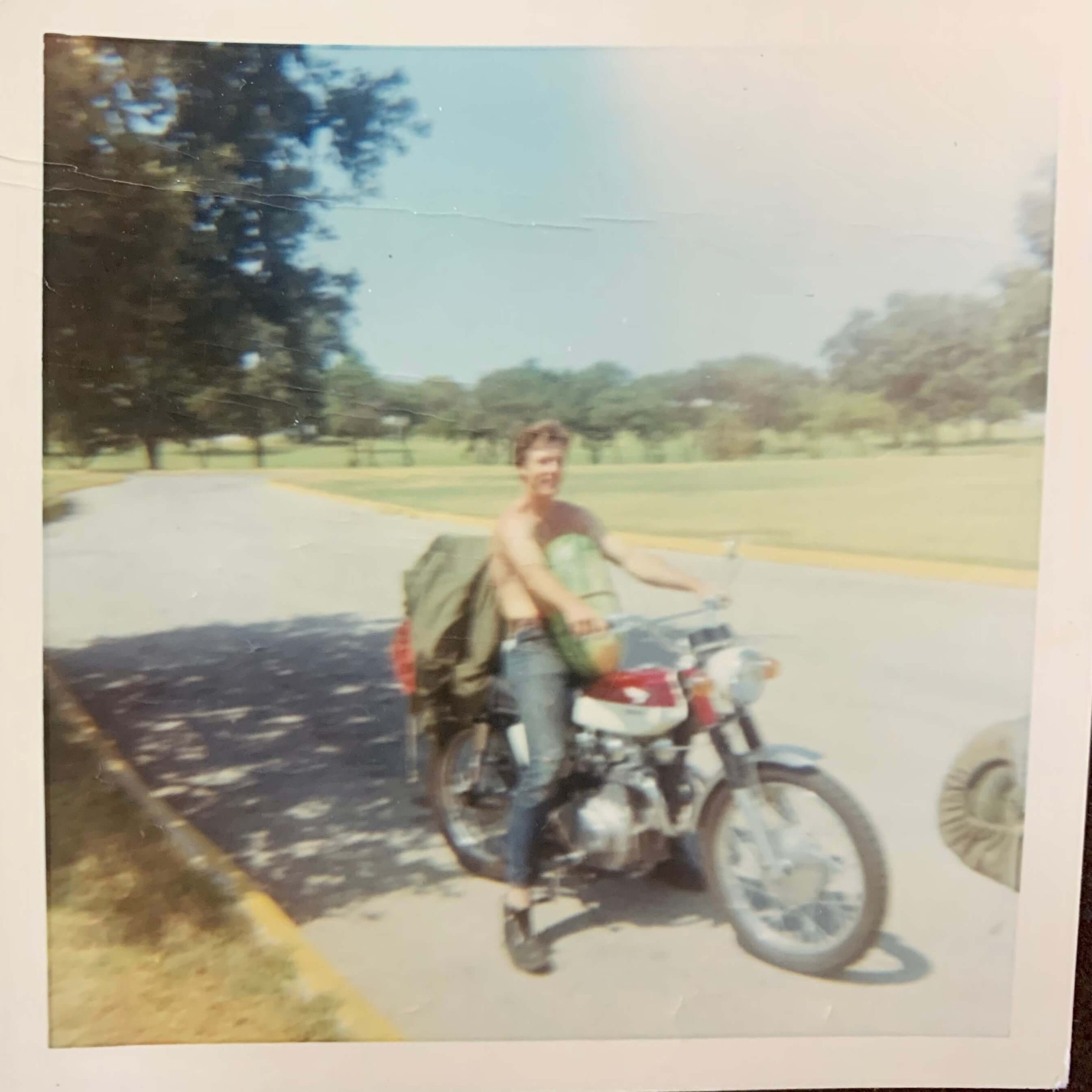
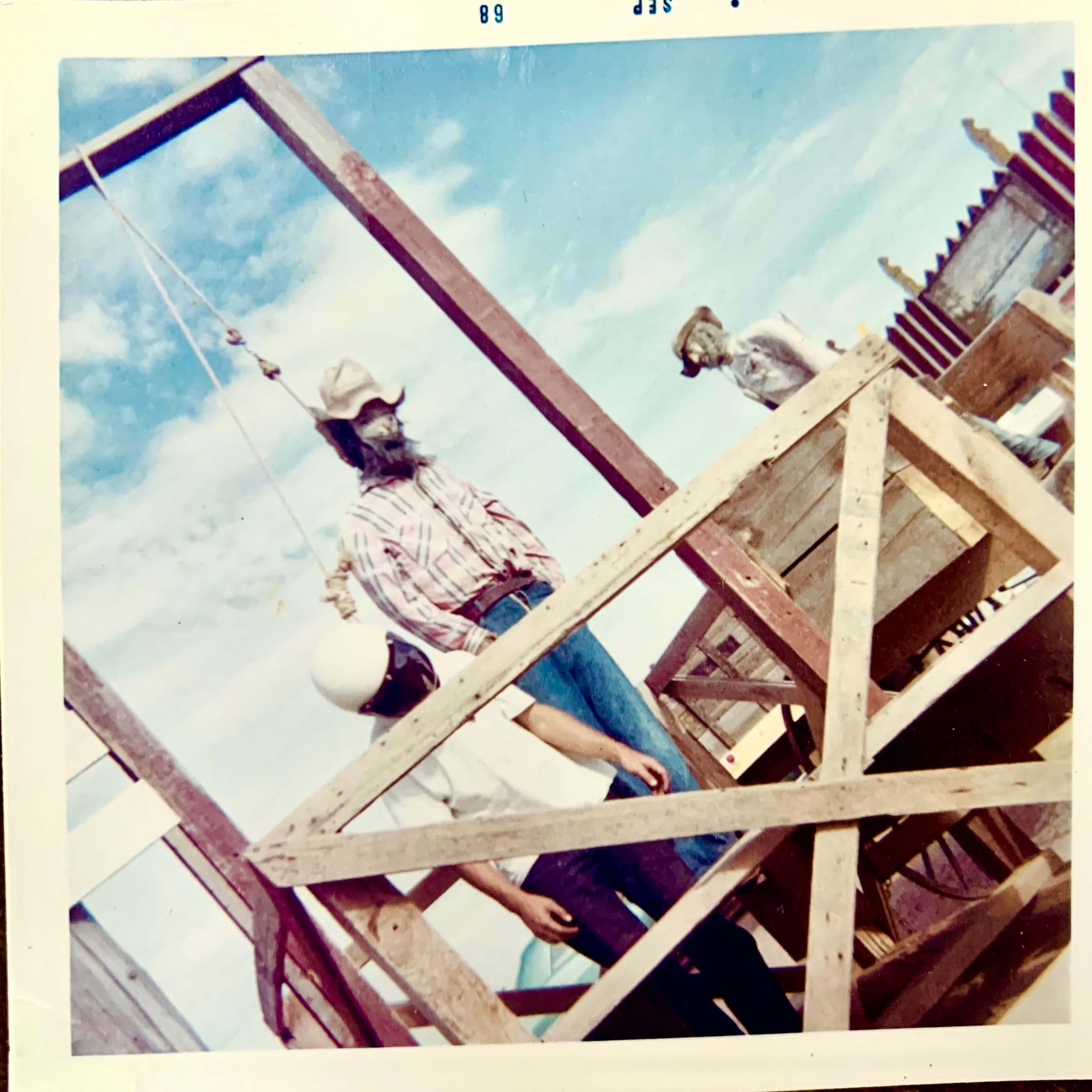
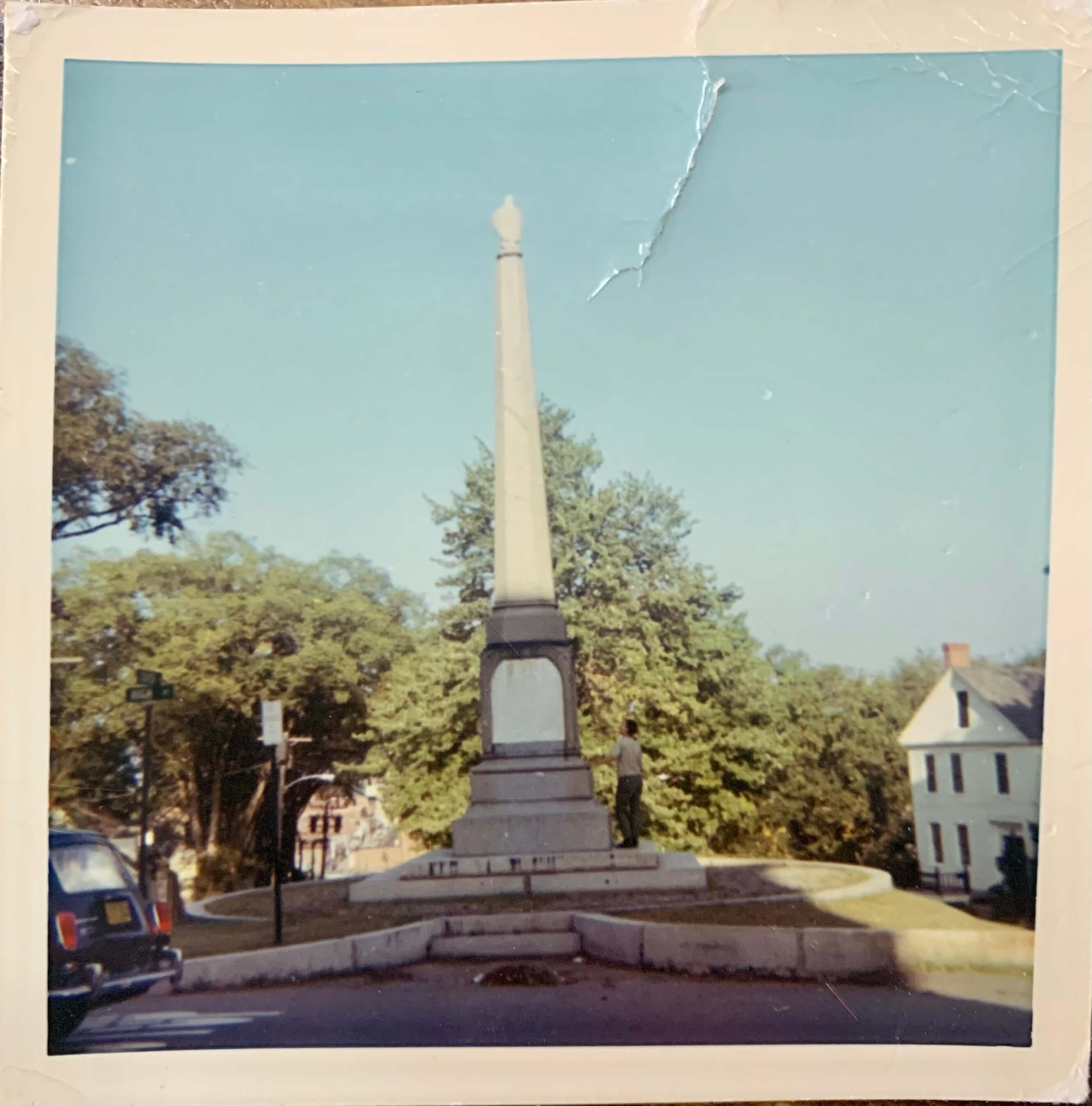
This story is based on a cross–country motorcycle trip the author made in the summer of 1968 with his older brother and two friends. The principal characters of The Trip, Tino, Sal, Gary, and Patrick, are based on the four young men who made the trip. Tim (Patrick), Gerry (Gary), Tony (Sal), and Armando (Tino). The novel is a mix of fact and fiction. For example, The Trip’s route is factual, while some of the events in the story were created by the author.
-
Ten minutes into the ride, the drizzle had developed into serious rain. Sal exited the highway and pulled to a motel.
Sal dropped his gear in a corner of their room. “You can have first shot in the bathroom.”
Tino walked into the bathroom and inspected the packet with the LSD. Still dry. Later, he pulled the covers over himself and sighed. The extra long and hard day tomorrow of chasing Sal to make up today’s lost time due to today’s rain would test Tino’s mettle.
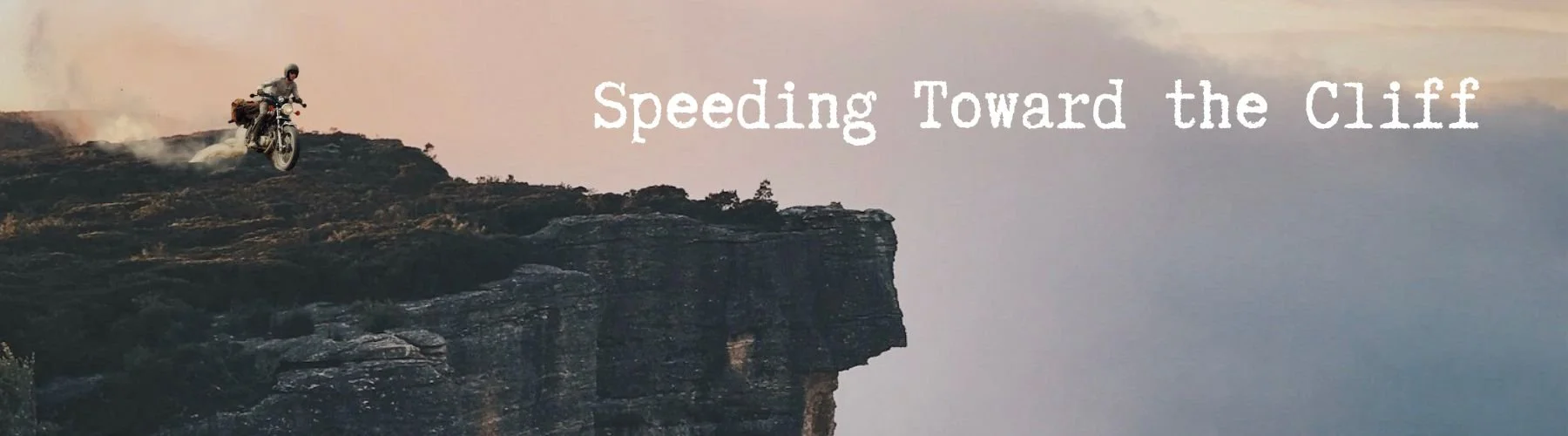
He fell to sleep and had the dream; the dream that had been haunting him. He’s on his motorcycle, Rocinante. They’re speeding toward the cliff at the end of the world. Panicked Tino hits the brakes, but to no avail. He leans hard trying to steer away, but Rocinante holds steady. Tino tries to jump off, but he’s stuck to the seat. He drags his heels against the ground. They fly over the cliff to their certain deaths.
“Nooo!” Tino screamed.
“What the heck?” Sal yelled from inside the bathroom.
Tino sat up in his bed, heart pounding hard in his chest. “Harsh dream,” he said.
“Hash browns? Is that what you want?” Sal said. “If you want hash browns, you’ll have to wait. We need to get to it.”
Tino ignored the misunderstanding and lay still, steading himself. He rose and looked out the window-dark skies, steady rain. “It’s still coming down. We’ll get soaked if we try to ride.”
“I know,” Sal said. “I looked out a bit ago. There’s a dry cleaner across the street.”
“So?”
“Got an idea. Get ready.”
“Now what?” Tino said minutes later as they stood outside under an awning protecting them from the rain.
“Watch and learn.” Sal covered his head with his jacket and jogged through the rain to the cleaners.
Twenty minutes later they were pulling out of the motel parking lot wrapped neck to ankle in plastic sheeting for protecting laundered clothes, all held in place by dozens of rubber bands.
Rainwater ran off the plastic in tiny rivulets as they rode toward the highway. Sal had even told Tino to spread sheeting over his crotch and bike seat to keep his privates comfy.
Great, Tino thought, leave it to Sal to find a way to beat the elements.
The bits of sheeting between the rubber bands whipped in the wind. The sheeting vibrated on the highway at fifty miles an hour; at sixty it began shredding. Cold water began seeping onto Tino’s clothes and worked its way to his chest, arms and legs. He hoped that Sal would accept that his plan against the rain had a major flaw and would pull over at a gas station to dry off, but Sal charged sixty-five, seventy.
Tino got the sensation of floating and realized that his tires were hydroplaning on a thin skin of water. He eased off the accelerator and came back into contact with the road. The sheeting had been reduced to tiny bits of vibrating plastic. He was getting soaked. Rain worked its way around the face shield of his helmet and dribbled onto his face. The cold spread over him like an aggressive disease. Tino’s only consolation was that drivers couldn’t see him through his tinted face shield, but he still felt the fool.
Rain eased the farther they rode and by late morning the sun ruled the skies, even if the chilly air cut like a cold blade.
Sal took an off–ramp and pulled into a laundromat.
“You a sissy?” Tino said, teeth chattering. “I’m only soaked to my pinche calzones.”
Sal laughed. “You can change in the bathroom first.”
Tino stood next to a dryer and peeled off his jacket, sweatshirt, and T-shirt. The air warmed his shriveled skin. Sal stayed outside next to his bike, shirtless and fumbling for dry clothes tucked in his gear. A cold gust gave Sal a hard shiver. Tino shook his head, knowing that Sal had remained outside hoping to hide behind his bike so as not to offend the women doing laundry by exposing his bare chest. But his bike wasn’t hide squat. The women still had a clear shot at him through the window.
Tino entered the bathroom with his sleeping bag containing dry clothes. He took the packet with the LSD from his pocket and examined it to see if rain had dampened the paper. Lord, the hippie, had warned him to not let the LSD get wet, or it’d ‘lose its power.’ The packet was slightly moist to the touch. He unfolded it with care. The black flake sat in the center of the magazine paper and over a photo of a feathered serpent carved on an ancient Mexican temple.
If Tino was going to find out what the drug was about, he’d have to take it now but Rex’s warning echoed in his ear, “Don’t fuck with that shit. It’ll get the best of you.” Rex was talking about heroin. LSD was different, and what if the rain had sapped its strength? Then it wouldn’t matter.
Tino stared at what was either a small piece of innocuous film for taking pictures or a powerful mind-altering drug. He closed his eyes, raised his head, opened his mouth, and p-laced the flake on his tongue.
“Corpus Christi.”
REVIEWS
The Characters
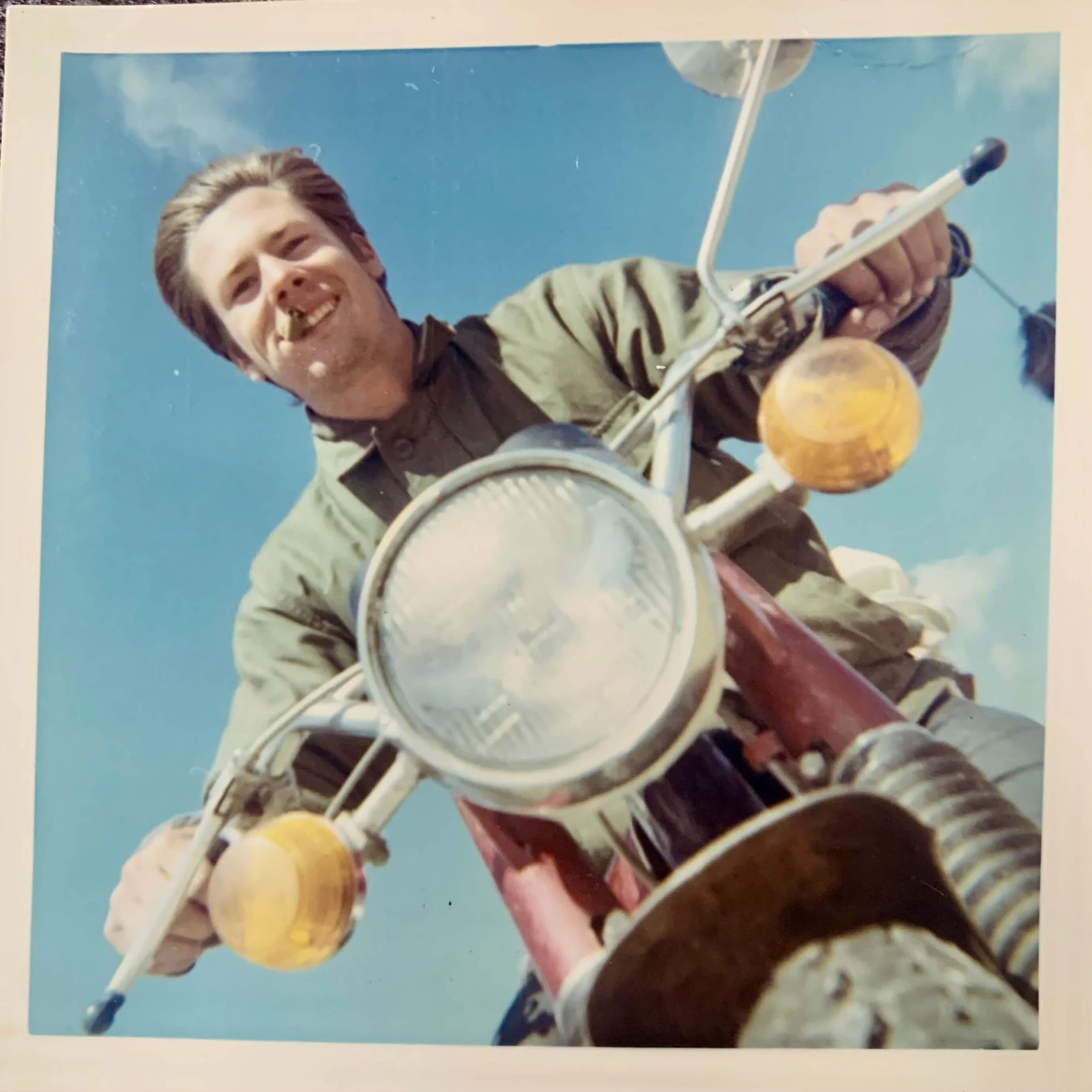
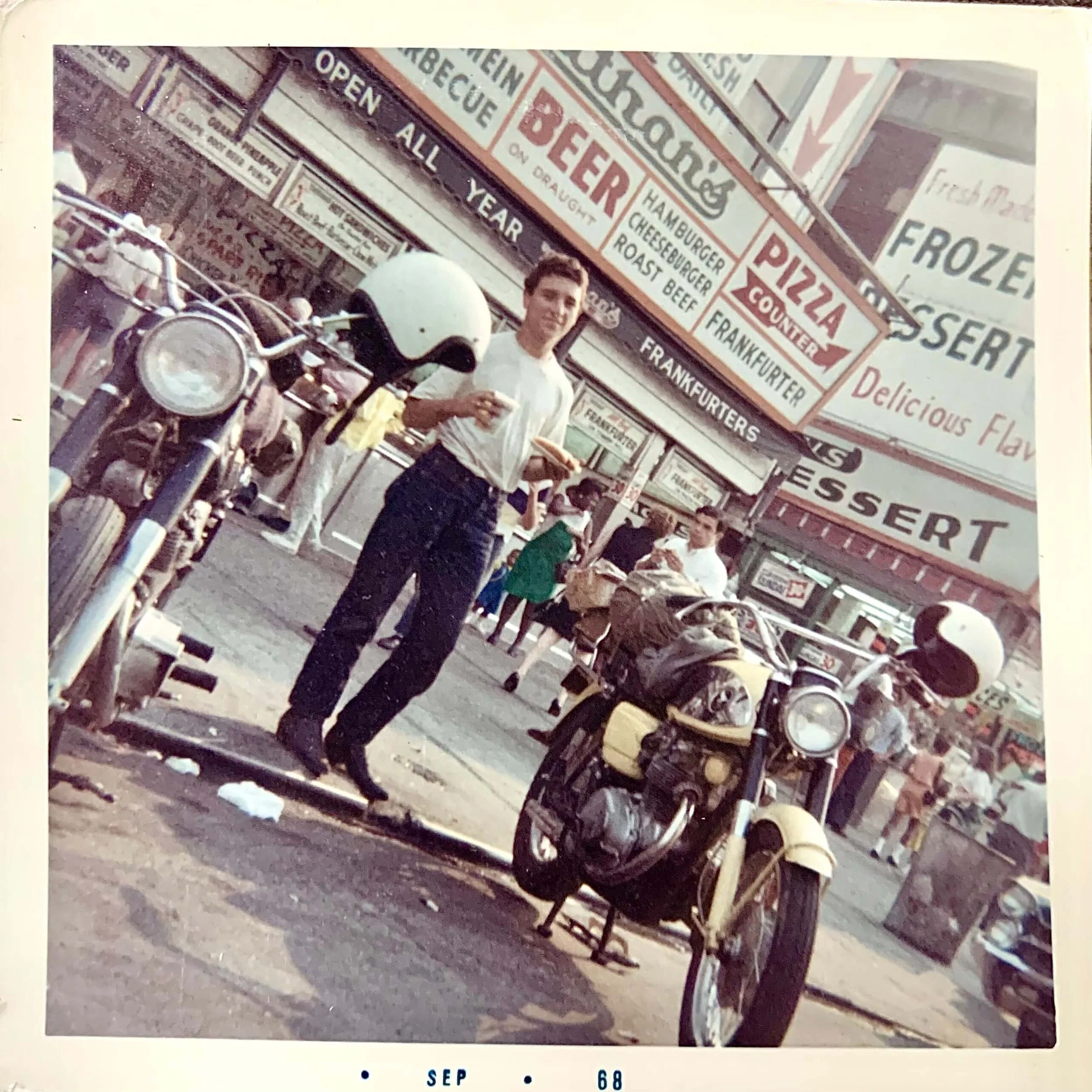
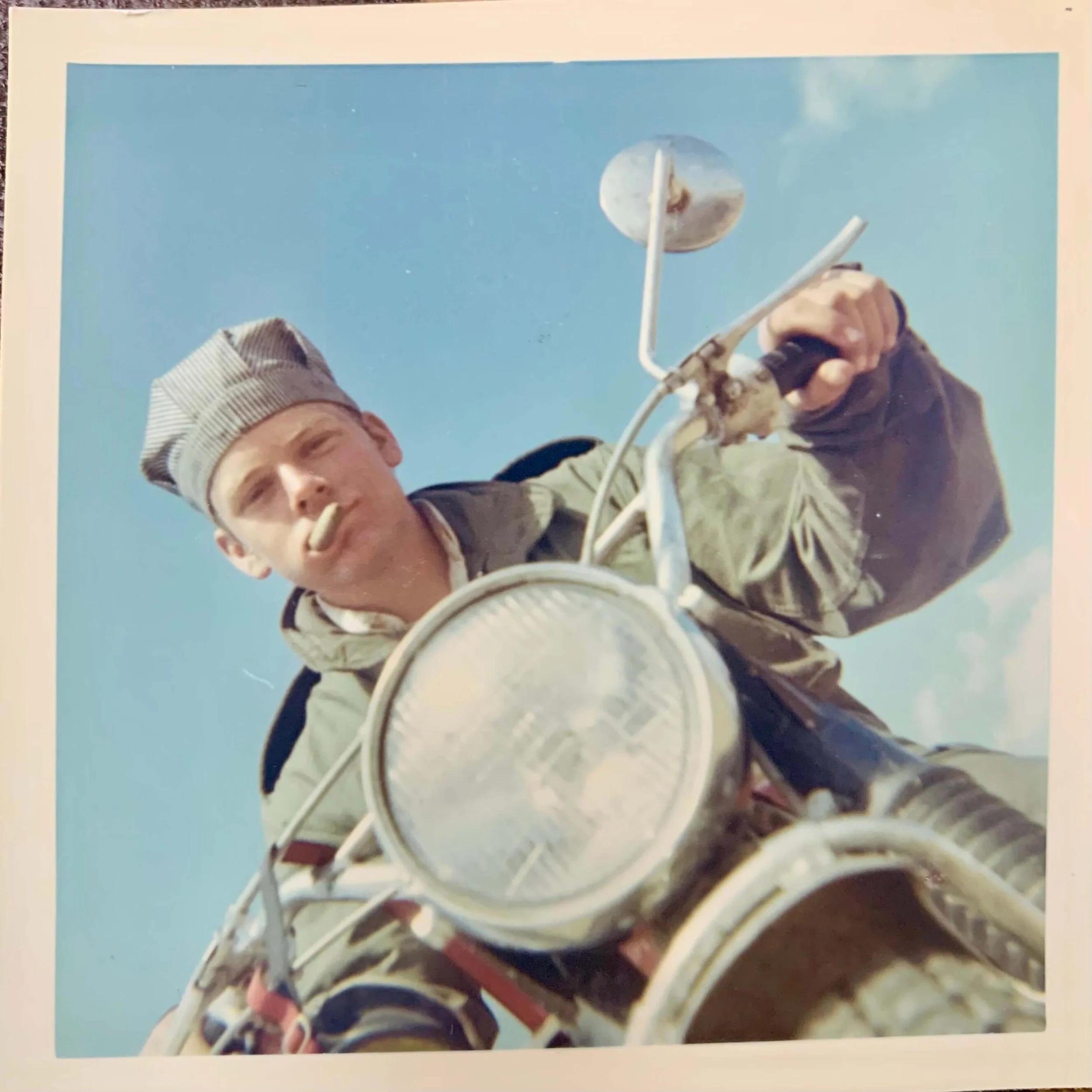
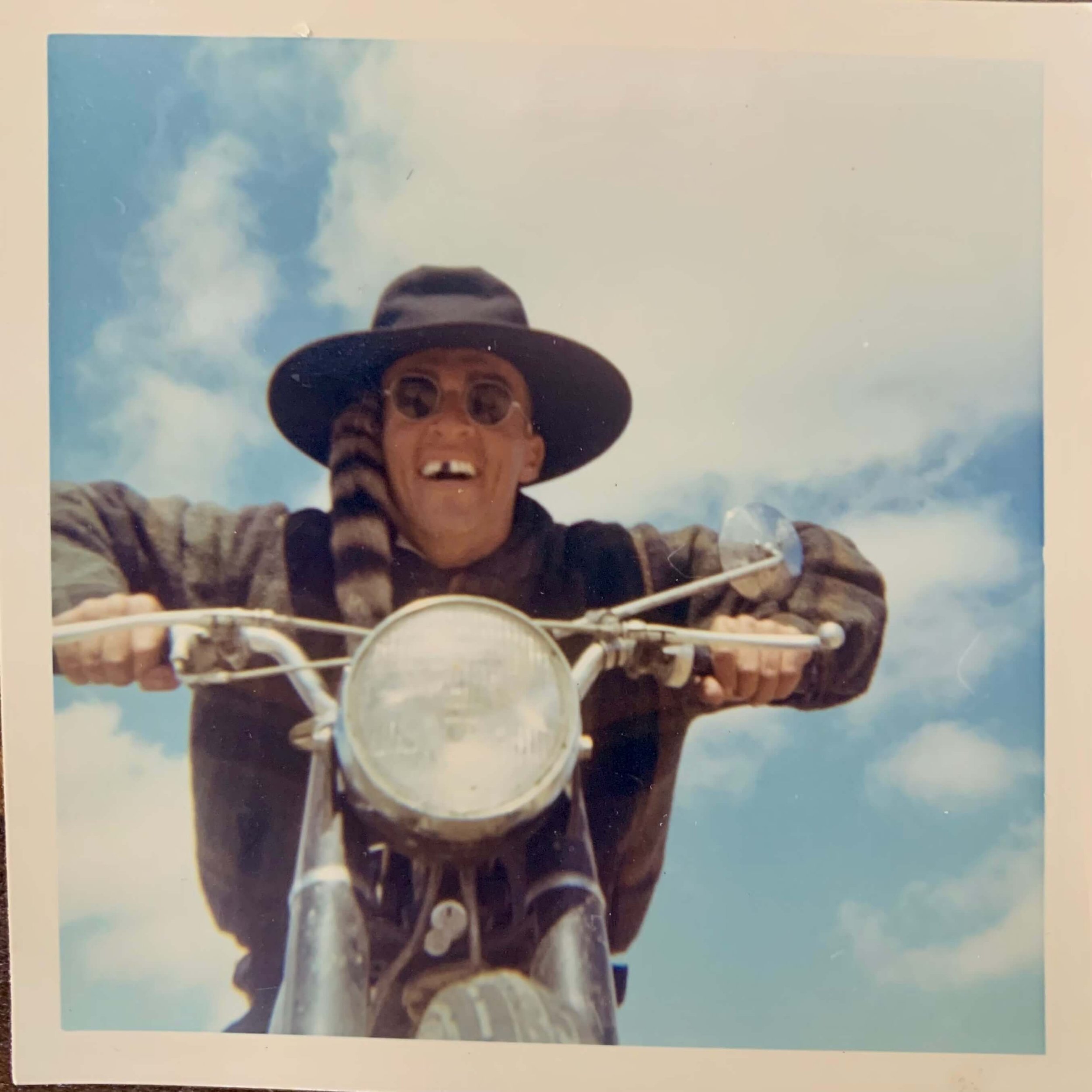
Photo Gallery


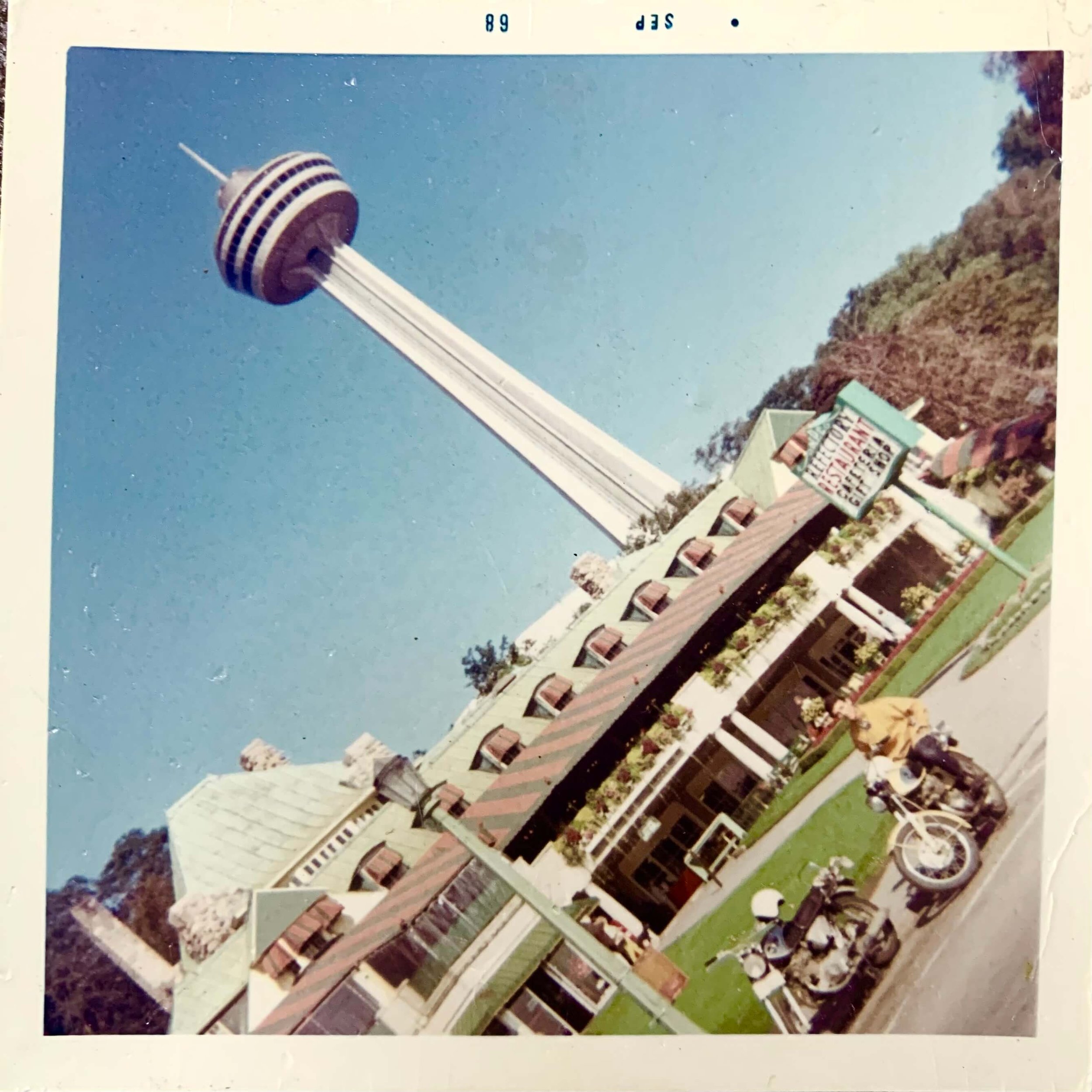
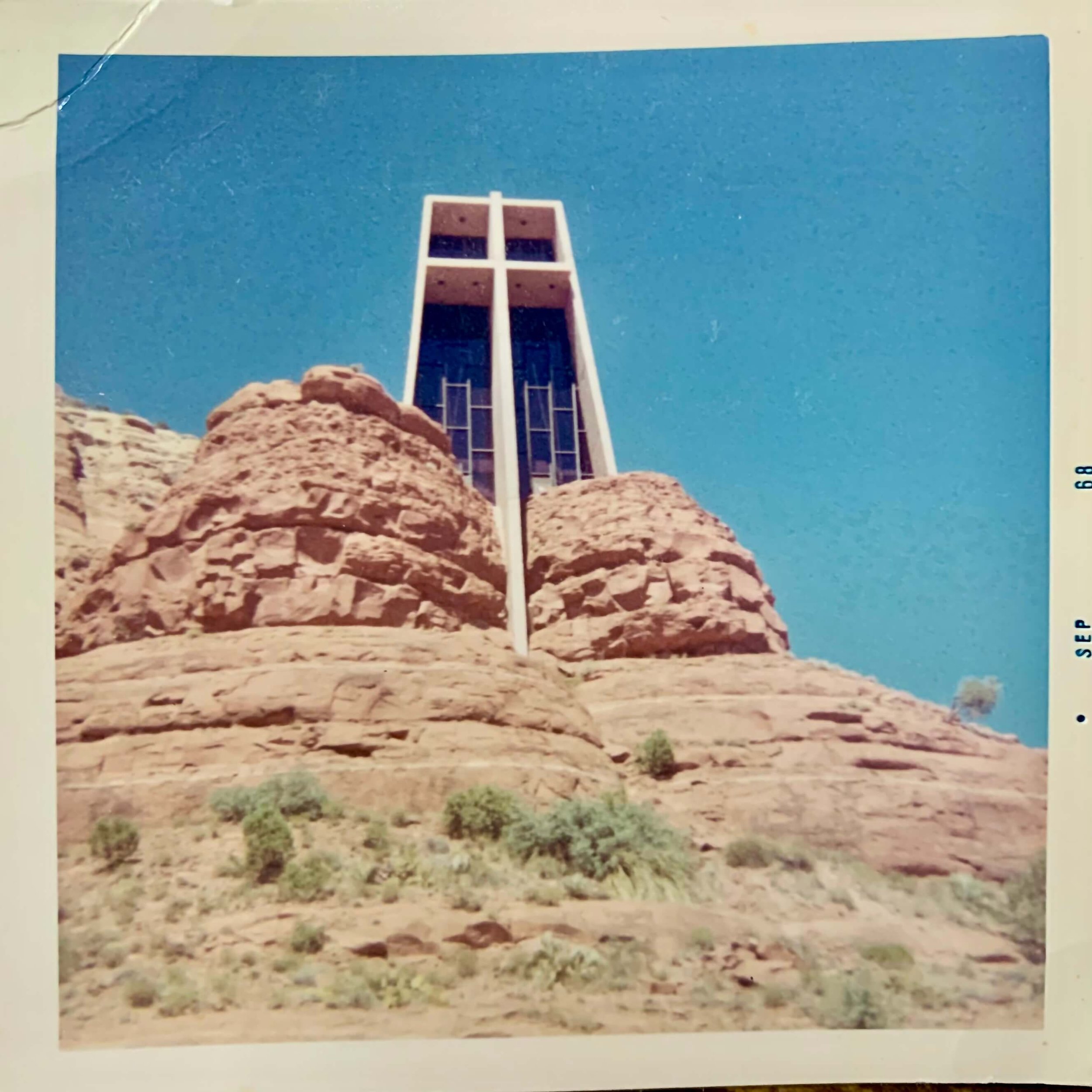
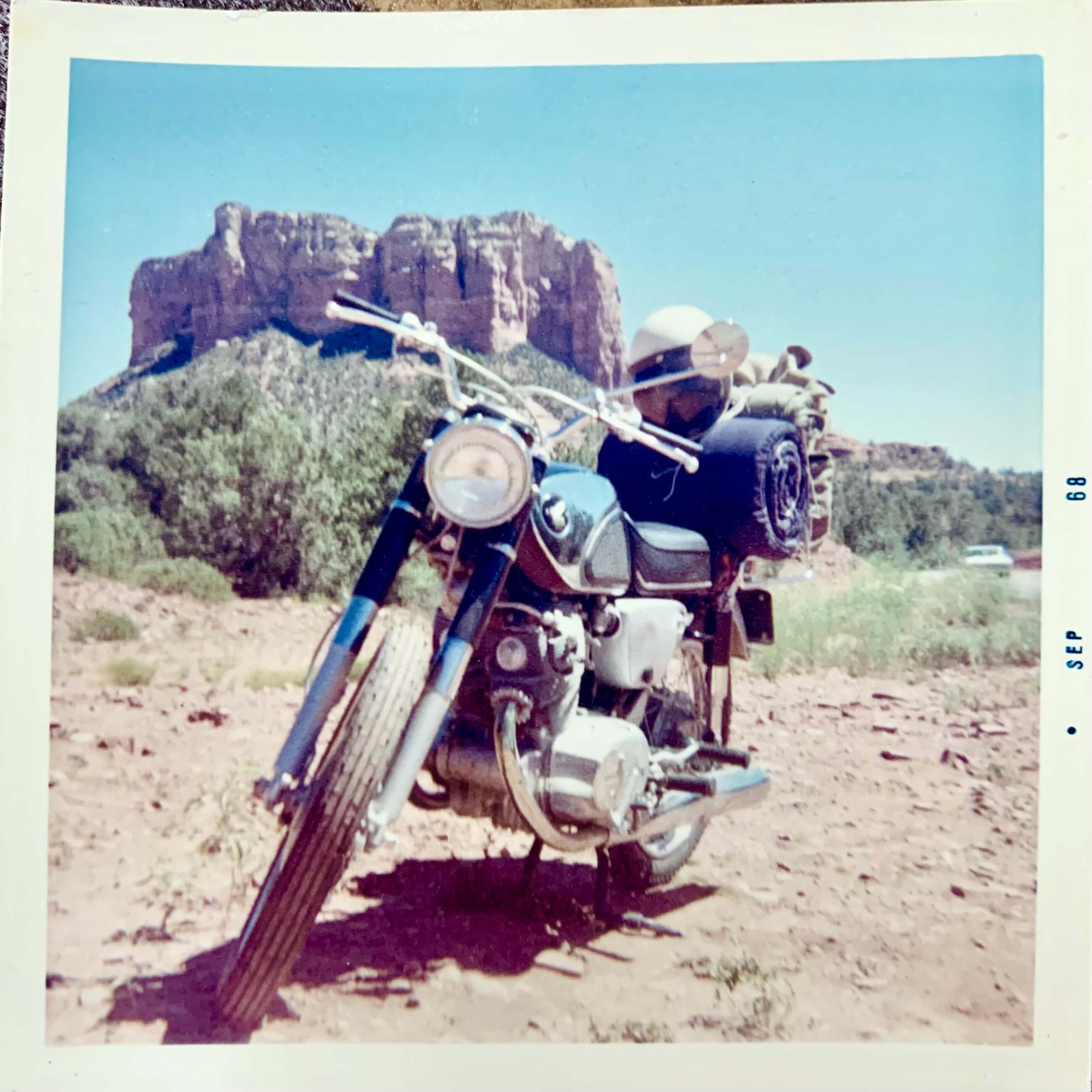
The Birth of the Memoir
The Trip started as a part of my memoir that I began writing around 2005. My wife, Kathy, read an early edit of the story of the motorcycle trip that I took in late summer of 1968 – just after high school graduation.
“Armando,” she said. “Everyone dreams of taking a long trip with no agenda other than seeing the world and having adventures. You not only lived that dream, but you did it on a motorcycle! The story needs to be more complete.”
“Okay,” I said, “so what would make it a more complete story?”
“At the very least there needs to be a love interest, and a confrontation between males.”
I have to admit that, that was when the story really started to develop into so much more than a description: this happened, and then this happened, and then... Boring. The memoir soon evolved into a novel based on actual events. It was also at this point that it became fun to write.
I took experiences that I had had out of the story and put them in as if they had happened on the trip. Other scenes and events I embellished or simply created. Kathy’s suggestion set me free, allowing my imagination to run, to see what I could come up with. I thank my sweetheart for her advice.
Follow The Journey

The Setting
America in the late 1960s serves as the backdrop for THE TRIP.
The country, like a snake shedding its old skin for new, was in the process of shedding its skin.
1968 proved to be a pivotal year in America ’s history. Women were steady marching toward breaking narrowly defined social roles. The National Organization of Women (NOW) had a few years under its belt and began flexing its muscles. They demonstrated outside the Miss America Pageant saying it was “exploitive of women.”
The Vietnam War hit its peak in 1968, (more U.S. servicemen were killed that year than any year before or after.) The draft, a true to life villain, loomed over every young man ’s head. The country, once pro war, had turned against it and massive anti-war demonstrations took place in major cities. The Democratic National Convention in Chicago saw anti-war demonstrations led by national figures such as Bobby Seale with the Black Panther Party, Tom Hayden and Students for a Democratic Society (SDS), Abbie Hoffman, Jerry Rubin, and the Youth International Party, (Yippies), and The Women ’s Strike Force for Peace. The demonstrations soon turned into riots.
Citizens across the nation turned on the evening news to see National Guard troops with fixed bayonets supporting helmeted police wielding billy clubs beating demonstrators, dragging them into paddy wagons and carting them off. Even news reporters were roughed up by the Chicago Police.
Bobby Kennedy, a shoe-in for the presidency, was assassinated in June of 1968. Martin Luther King Jr. was shot to death in April and race riots broke out in over 100 cities across the country. Thousands of buildings were burned to the ground.
International news programs showed white racists, and racist law enforcement departments attacking black people in the South who were only demonstrating for the same rights as white people.
Hippies were roaming the country in 1968: hitchhiking, in VW bugs and vans, or in brightly painted busses converted into mobile homes. Hippies were looking to free themselves from a culture of consumption and waste. The hippies looked to establish a counter-culture with its own dress, language, music, and art. Hippies turned away from alcohol and toward marijuana and hallucinogenic drugs like LSD, psilocybin mushrooms, peyote.
In summer of 1968, nineteen-year-old Tino Caballero feeling shackled by his Mexican-born parents ’ old world culture, and the many demands of the Catholic Church, joined, Sal his older brother, on a cross-country motorcycle trip. Tinos ’ father, whose word was law, had mandated that Tino register for college instead of making the trip, but Tino was not going to miss out on the adventure of a lifetime and sneaked off when his father was sleeping before his graveyard shift at the trucking company. Tino would face the consequences, perhaps a beating, after the trip.
And so began Tino ’s personal odyssey that would forever change his life. Tino, like a snake shedding its skin, shed his old life for a new one.